Insight
Your AI is only as good as the humans behind it
What flying 30-plus people to Lithuania for a week of planning, workshops, outdoor escape rooms and a hot wing contest taught us about staying human while shipping production AI.
There’s no clean way to explain the hot wing contest, so let’s start there.
It began as a throwaway comment in a meeting about what actually counts as “hot” in the US versus Lithuania. The joke had legs. So much so that it got its own moment on the company calendar, with some specially marked wings, and few people willing to find out the hard way. There was no winner, just survivors. For the rest of the week, “how’s your stomach doing?” was the easiest icebreaker in the building.
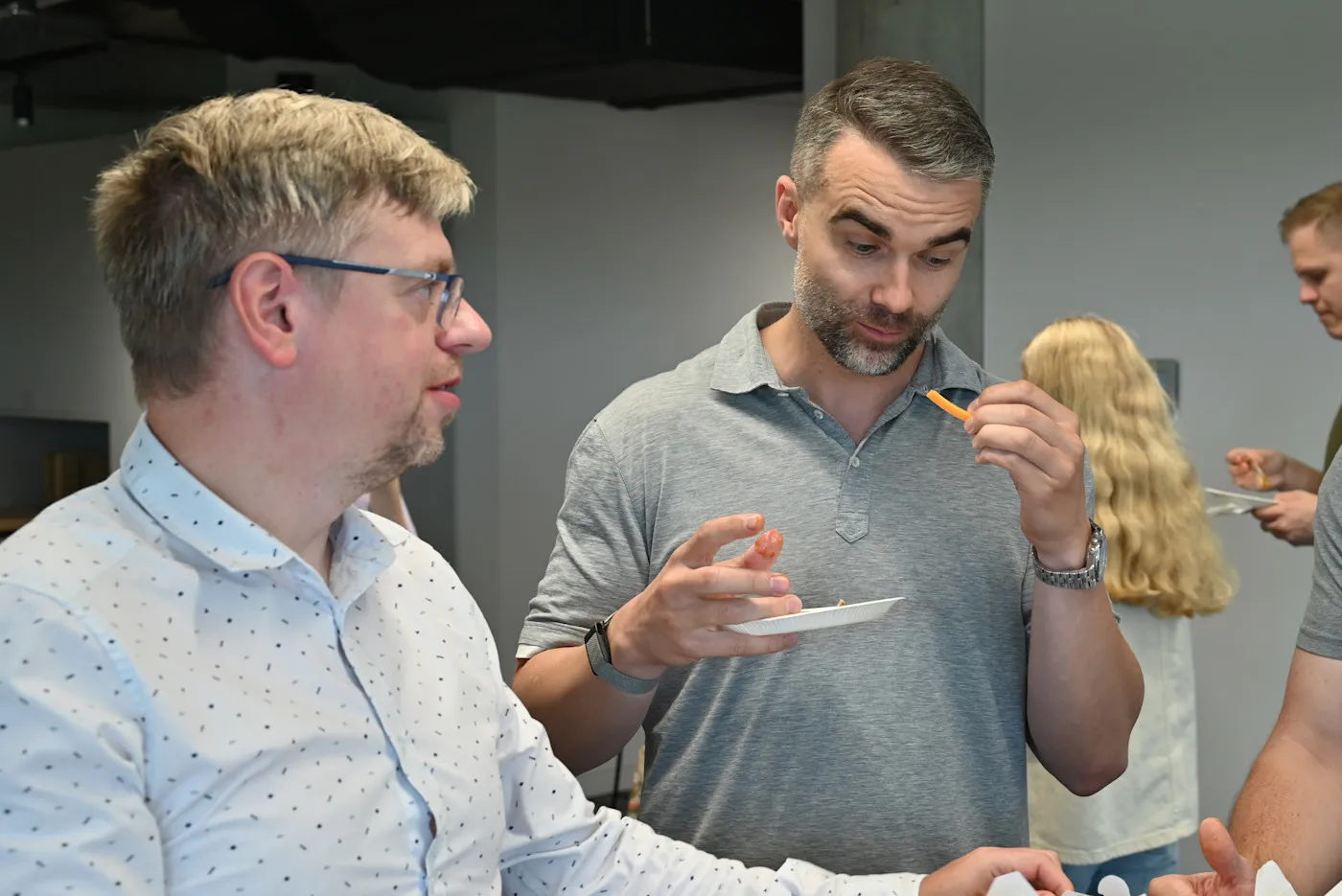
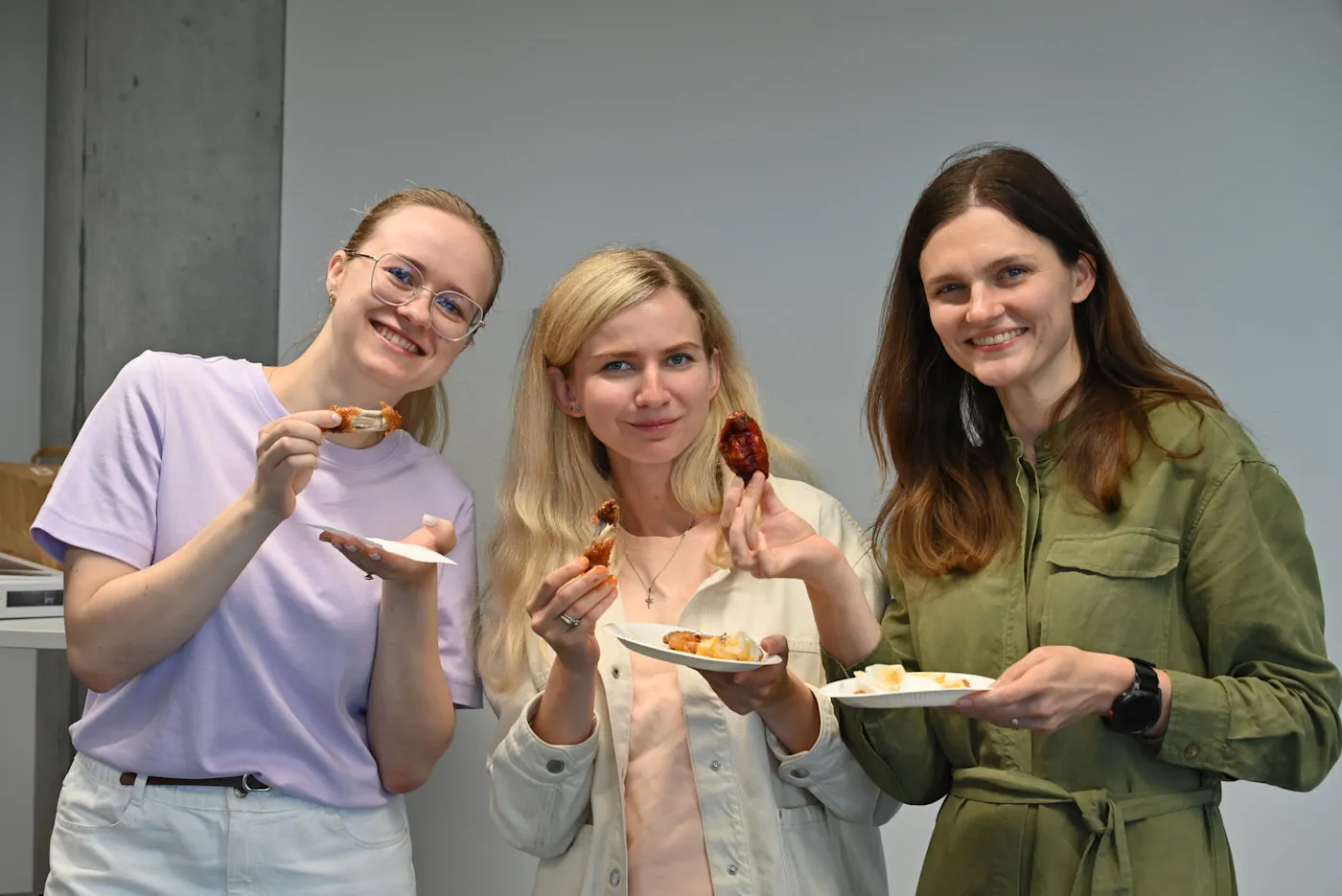
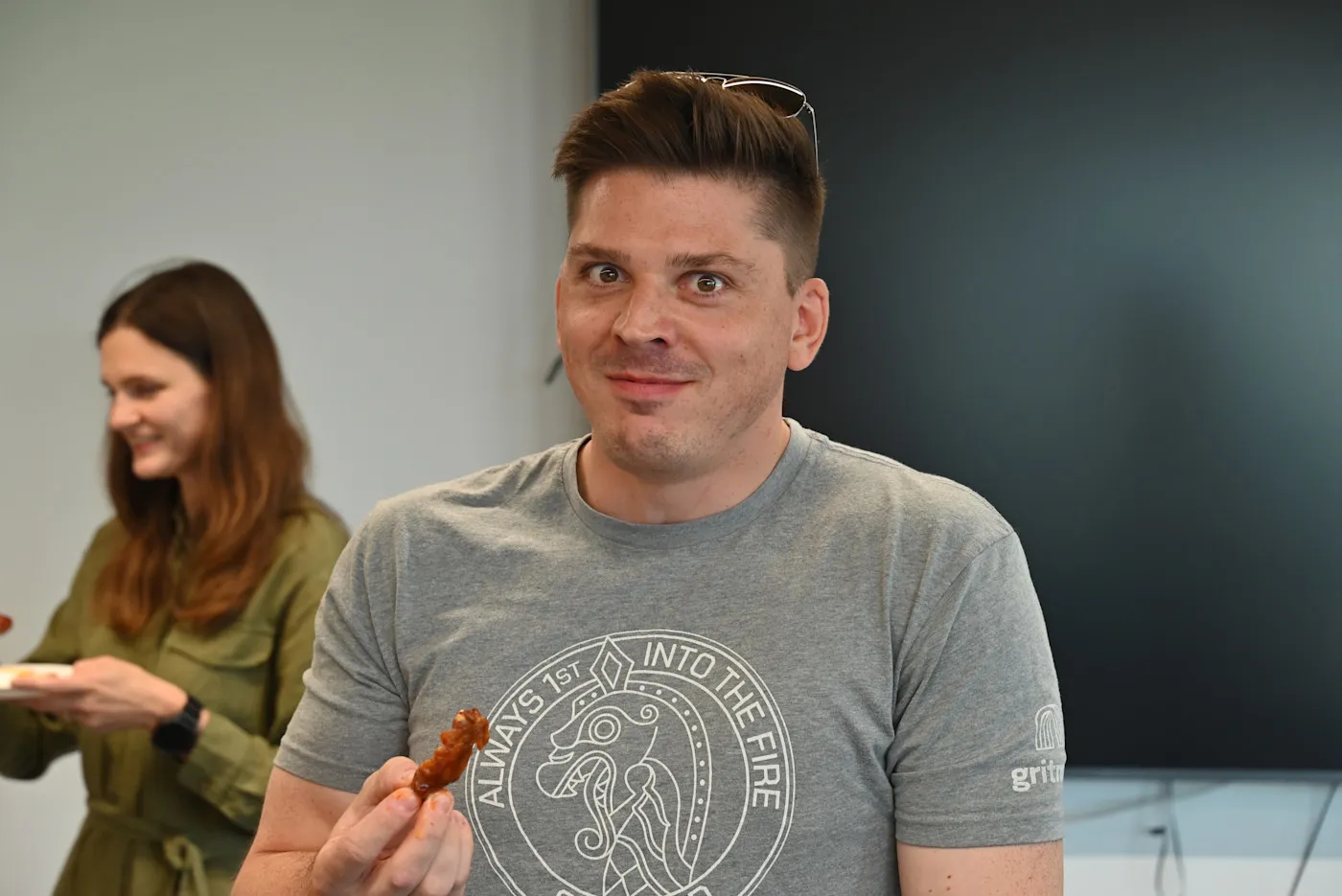
That’s Gritfest in a nutshell. Once a year, our entire US team flies out to join our Vilnius and Kaunas offices for a full week together, and this year it ended with Gritfest, our annual summer party.
None of that camaraderie shows up on a roadmap, but it’s part of the ecosystem that makes everything possible. All of it matters.
We build production AI systems for a living. It would be reasonable to assume that a company living inside that work gets a little less human the busier it gets. We don’t think that’s true, and we’re not interested in finding out otherwise.
This is more than a hot wings story. It’s about how we think a company like ours has to run if the technology is going to hold up long term.
The real risk isn’t slowing down
Most conversations about scaling an AI company focus on the wrong variable. Leadership teams talk about headcount, roadmap velocity, and how fast the next feature ships. Those are real conversations, but they sit downstream of a more basic one:
What kind of company do you actually want people to want to work at?
Under growth pressure, a lot of companies quietly answer that question by neglect. Travel budgets get cut. In-person time becomes a nice to have. Culture gets treated like a cost center instead of infrastructure. The result is predictable: teams that talk over Slack and Zoom but never really know each other, decisions made by whoever’s loudest in the thread, and a workforce that treats the company as a place they work, not a team they’re on.
Gritfest is our clearest deviation from that mindset.
An old habit, a new company
Despite Gritmind only being two-years-old, a lot of our team has been doing some version of this trip for over a decade. The idea is simply to get everyone in a room and put an actual face to the people you normally only know through email threads and Teams calls.
The week was full. Leadership ran Q3 planning sessions. Teams held one-on-ones. There were even two hands-on workshops (one on spec-driven development, one on Git fundamentals and our design library) to get everyone working off the same technical playbook. We closed with an all-hands on where the company has been and where it’s headed, capped with an open Q&A.
What Gritfest was really about
Everything Gritmind does starts with the end game in mind. On the business side, that means getting AI into production as efficiently and reliably as possible, not stopping at a slide deck or a pilot. On the personal side, it means remembering that the goal was never just shipping software. It’s building a place where the people doing that work enjoy doing it together.
That philosophy showed up all week. Team dinners that ran long, small groups huddled around a TV watching World Cup semifinals at midnight. Even Gritfest opening with a team challenge with random partners, making sure everyone was working together at some point. They were the community moments that did more than anything on the agenda could.
AI is moving fast. It’s easy to assume that means the human side of work matters less. But the reality is, the more technology changes, the more valuable trust, collaboration, and time spent together become.
That’s the thread connecting our planning sessions, the escape room, the wings, the lake, and every conversation in between. Different settings, same philosophy: do serious work without taking ourselves too seriously.
The question worth asking
Most AI leaders spend their time asking:
“How do we move faster?”
Increasingly, the better question is:
“As AI increases the velocity, are we building the right team to steer it?”
At Gritmind, we know we have the talent and the resilience to navigate that speed. But we also know that true alignment requires stepping away from the keyboard and interacting in the real world.
Ready to turn insights into impact?
Every bottleneck has a root cause.
Whatever challenge you’re facing, we can help you solve it - together.
Keep reading
Forbes Speaks with Gritmind on the Future of Forward-Deployed Engineering
Forbes collaborated with Gritmind to cover AI labs' growing interest in implementation firms. Here's why the model was never the real bottleneck, and what that means for companies trying to move AI from pilot to production.
Ramūnas Zavistanavičius · Sep 25, 2026Read →InsightThe Best AI Use Case Might Be the Most Boring One in the Room
The AI use case that sounds most impressive is rarely the one worth funding. Here's how to spot the boring option that actually pays for itself, and why most teams miss it.
Adam Rusciolelli · Aug 27, 2026Read →